
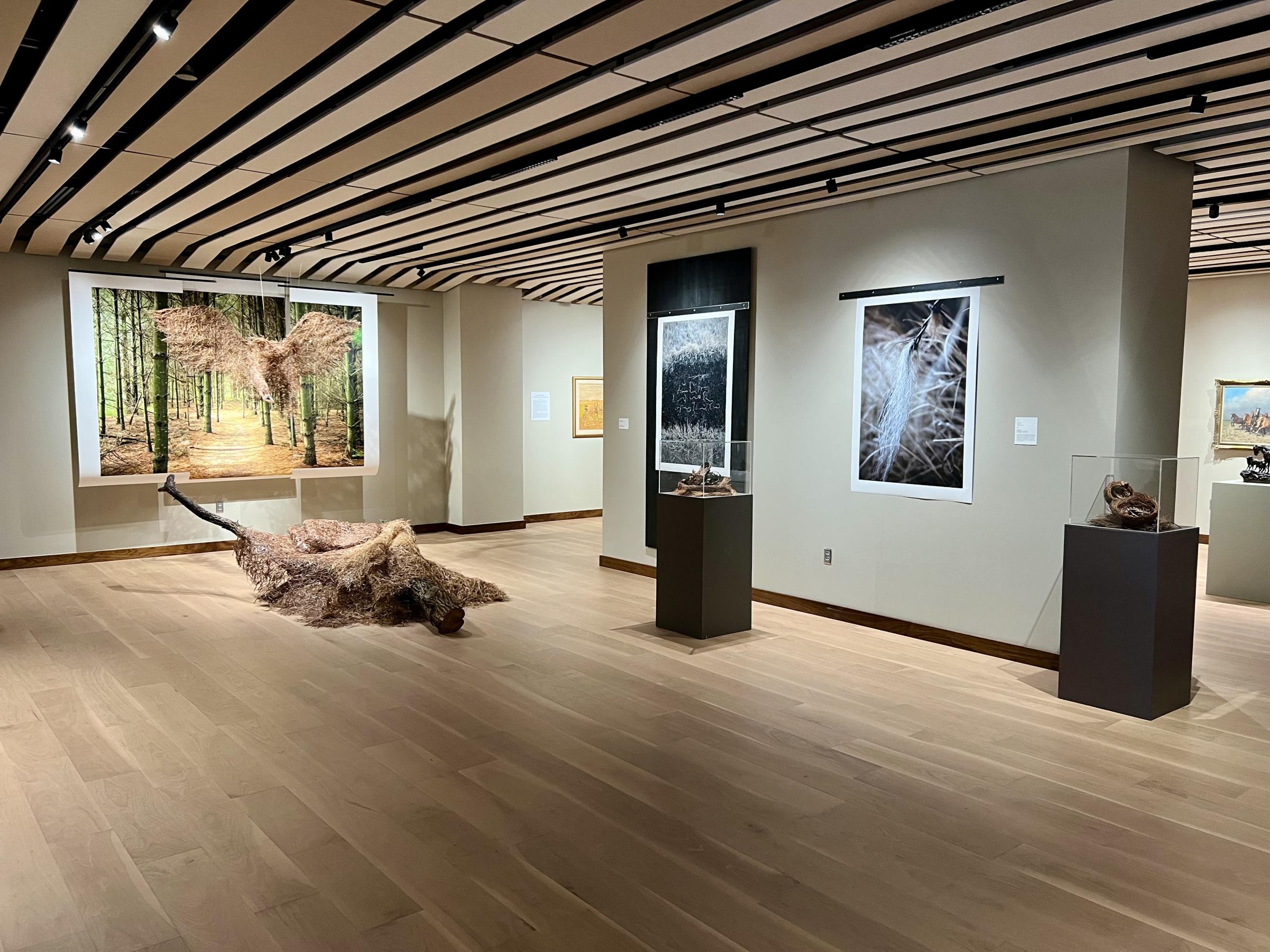
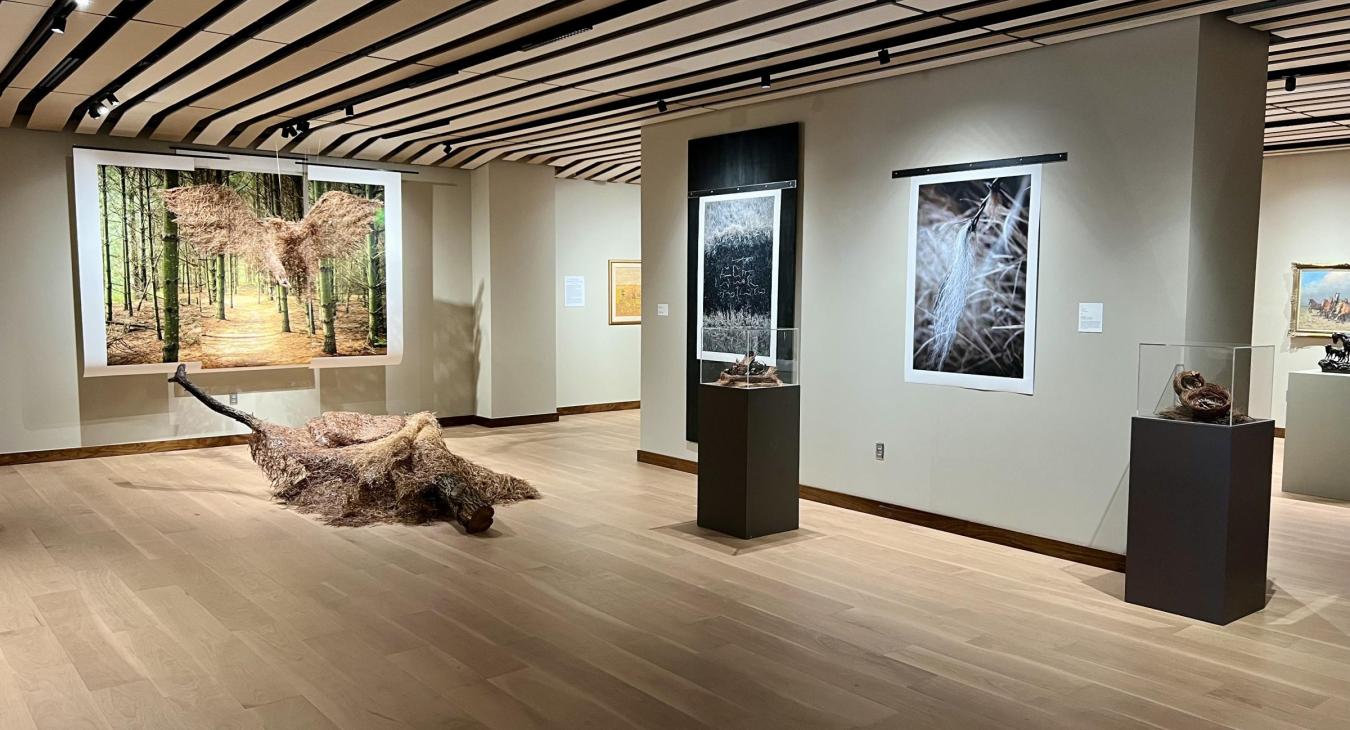
The Bone Creek Museum of Agrarian Art unveils a powerful new chapter in its history with the opening of its newly renovated facility and the premiere of La Bergère–Shepherdess, a major exhibition by acclaimed multimedia artist and photographer Lark Gilmer. On view now through March 15, 2026, the exhibition marks a bold step forward in the museum’s vision to become the nation’s leading center for agrarian art.
The expanded space—enthusiastically received by summer visitors—represents a transformative leap from the original gallery that has served the community since 2008. With this renovation, Bone Creek is now able to present exhibitions of national caliber, deepening its mission to connect people to the land through art.
Supported in part by the Nebraska Arts Council and the Nebraska Cultural Endowment, La Bergère–Shepherdess is the museum’s inaugural major exhibition in the new space and sets a high benchmark for future programming.
Through a moving blend of photography, painting, and installation, Lark Gilmer explores the solitary, elemental life of a shepherd. Her immersive work captures the raw beauty and quiet resilience of agrarian life: the relentless wind, the devoted dogs, the rugged terrain, and moments of deep communion with the land and animals.
“In many ways, Lark embodies the meaning of La Bergère—not only as a protector of her flock, but also as a guardian of art and the land,” said curator Amanda Guenther.
Gilmer’s unique practice includes placing works directly into the landscape, allowing weather and time to shape them—a poetic act that reflects her deep connection to nature. This spirit of generosity and spontaneity infuses the exhibition with wonder and meaning.
“I have often felt the pull to connect, and reconnect with the land, torn between duty and calling,” Gilmer writes. “My authentic life is born from the land, working with it in my every day and I am refreshed every time I return. My work attempts to capture a land-based practice, life-sized so that the viewer can experience a moment as I do. When I am able, I use the camera and when I cannot, I use a brush. They are all lived experiences on the land.”
The exhibition’s scale, emotional power, and artistic excellence rival those found in major museums nationwide. La Bergère–Shepherdess is a striking affirmation of Bone Creek’s evolving role on the national stage—bringing thought-provoking, deeply human exhibitions to audiences in Nebraska and beyond.
Bone Creek Museum of Agrarian Art was closed for only four short months to move from its original location to a newly renovated historic building at 312 North 5th Street. The grand reopening on Saturday, April 12, boasted a standing-room-only crowd in attendance gathered in the front multi-purpose room, which originally served as the vehicle showroom of the Ford Motor Co. assembly plant. There were 450 people present throughout the day’s festivities, which included a ribbon cutting by the Nebraska Department of Economic Development director, remarks by state senators, gallery tours, and hands-on crafts.
Bone Creek Museum of Agrarian Art opened in 2008 with a specialized focus on art of the land. It is the only Agrarian Art museum in the nation. Remarks by guest speakers boasted the local pride of having the attraction as an asset to increase tourism. The museum serves as the cornerstone of Destination David, a creative district designated by the Nebraska Arts Council.
Expansion of the museum was a concept for 10 years, an active fundraising campaign for four years, and a construction project for less than 24 months. The project’s contractors received top awards from the Associated Builders and Contractors of Nebraska/South Dakota just this month in the Historical Renovation/Restoration category for projects under $25 million. Cheever’s renovation of the 1917 historic Ford Building was well under the competition’s category limit, at approximately $5 million. The team received two other awards for the execution and coordination of the HVAC system and the advanced lighting system.
The museum’s board of directors intentionally preserved some of this building’s interesting history. Grandfather of Joyce C. Hall (founder of Hallmark cards) owned the David City lots as a livery stable before selling to build the Ford dealership. The large brick building was an assembly plant and showroom for Model- T Ford automobiles. But like so many buildings in small towns, it had become vacant in recent decades and fallen into disrepair. Preserving a history of place is in keeping with the mission of the organization’s local founders. CMBA architects retained the historic design of the front lobby with the original tile floors, solid woodwork and period light fixtures. There is also a Ford automobile on permanent display in tribute to the building’s history. This particular 1923 Model-T was believed to have been the very first four-door model T sedan to have been assembled onsite and sold from the showroom.
Now the 1917 structure has been remodeled as a world-class art museum, preserving the character and charm that has grounded this corner of town, just off the city square, for more than 100 years. Some of the features of the new building include five galleries, two classrooms, and a small theatre. “There is no underestimating the impact of this building on the activities of the museum. We now have dedicated spaces for artist talks and receptions, proper spaces for receiving and storing the growing collection, and room to host in-house art workshops,” said collections manager Gabrielle Comte.
Bone Creek Museum of Agrarian Art’s mission is to connect people to the land through art. With each exhibition, Bone Creek Museum consistently captures a theme that is very challenging and compelling to the contemporary arts conversation. They have joined the conversation about farming, past, present and future, with creative expression that culminates in an emotional response from the viewer. The art becomes a tool for discussion and simultaneously a means to its own end.
They are paving their own way forward to tell the timeless but unique stories of agriculture and Agrarian Art in America and across the world.
The museum is now open at 312 North 5th Street, David City, Wed. – Sat. 10:00am -4:00pm and Sunday 1:00-4:00pm. Learn more at bonecreek.org.
Written by Amanda Mobly Guenther, Curator and Sarah Juranek, Operations Manager. Photograph provided by Bone Creek Museum.